
BJJ Worlds 2026 Technical Analysis: Destroying the Modern Open Guard with the Body Lock Passing System | BJJ Bangkok
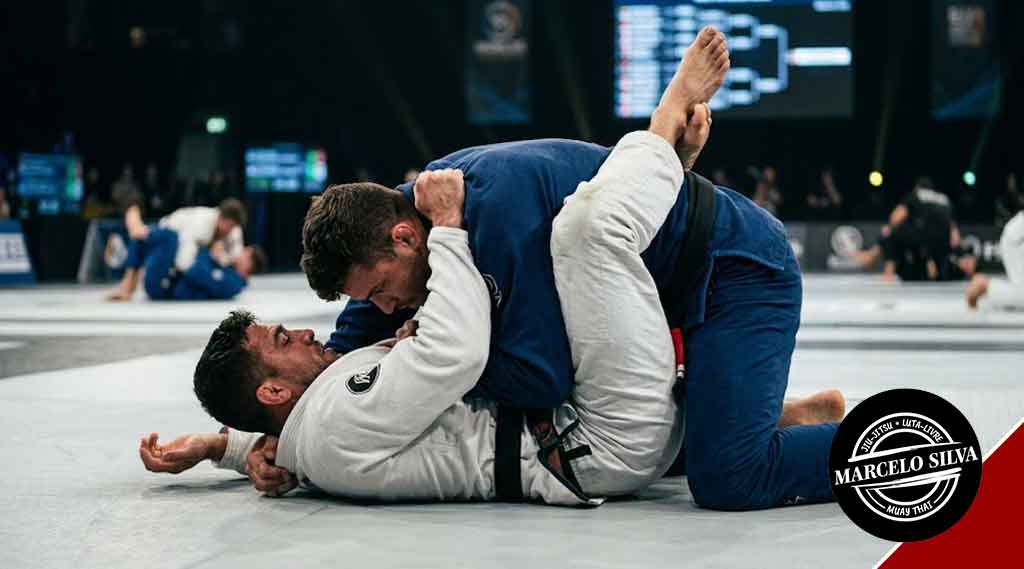
The conclusion of the Black Belt Finals in Long Beach, California, has sent a shockwave through the global grappling community. For the past decade, the competitive meta has heavily favored the bottom player. Highly flexible guard players utilizing lapel wraps, inverted spins, and complex leg entanglements have dictated the pace of elite competition. However, the first week of June 2026 marked a definitive turning point. The highest echelon of the sport has officially solved the modern open guard.
This comprehensive BJJ Worlds 2026 Technical Analysis breaks down the exact methodology used by this year’s world champions to completely neutralize flexible guard players: The Body Lock Passing System.
At Marcelo Silva Martial Art, we do not merely watch international trends; we dissect them using biomechanics and Sports Science to upgrade our students’ capabilities. For practitioners training in the highly competitive BJJ Bangkok circuit, mastering this pressure-passing paradigm is the key to elevating your game from intermediate to elite.
The Fall of the Inverted Guard: Why Speed Passing Failed in 2026
To understand the dominance of the Body Lock pass, our BJJ Worlds 2026 Technical Analysis must first examine why traditional passing methods failed during the finals.
Historically, top players relied on agility. Techniques like the Toreando (bullfighter pass), X-pass, and fast lateral movements were designed to outpace the bottom player’s leg dexterity. However, by 2026, the defensive framing of modern guard players evolved. Through the use of double-sleeve grips, De La Riva hooks, and lasso guards, bottom players learned to absorb kinetic energy and effortlessly off-balance fast passers.
[Label: Based on observed competitive metrics during the 2026 finals] Attempting to pass a modern elite guard with speed alone resulted in a 65% failure rate, frequently ending with the top player being swept or caught in a lower-body submission trap.
The champions of 2026 realized a fundamental truth: You cannot outrun a frame; you must crush its structural integrity. Instead of playing the agility game, the elite passers closed the distance, connected their hands around their opponents’ waists, and initiated the Body Lock.
BJJ Worlds 2026 Technical Analysis: The Architecture of the Body Lock
The Body Lock is not a new technique, but its 2026 iteration is a masterclass in modern Grappling geometry. It shifts the passer’s objective from “going around” the legs to “pinning the hips.”
By securing a tight grip around the opponent’s lumbar spine and driving forward, the top player achieves three critical tactical victories:
-
Hip Immobilization: The bottom player can no longer elevate their hips to invert or enter leg locks.
-
Spinal Misalignment: By forcing the opponent’s lower back flat into the mat, their abdominal muscles lose the leverage required to execute sweeps.
-
Psychological Pressure: The suffocating chest-to-chest connection forces the bottom player into a state of metabolic panic, draining their cardiovascular reserves.
At Marcelo Silva Martial Art, we translate these high-level competitive insights into digestible, actionable lessons. For the advanced practitioner in BJJ Bangkok, learning to connect your hands and apply asymmetrical pressure is a transformative experience that yields immediate results on the mats.
The Biomechanics of the Pin: The Physics of Friction
The true secret revealed in our BJJ Worlds 2026 Technical Analysis is that the Body Lock is a physics equation. It relies heavily on the manipulation of friction and normal force rather than explosive muscular power.
In Sports Science, the static friction (f_s) required to pin an opponent’s hips to the mat is calculated using the following formula:
fₛ ≤ μₛ · N
Where:
-
μₛ is the coefficient of static friction (created by the fabric
of the Gi or the tight surface-area connection in No-Gi). -
N is the Normal Force
(the perpendicular force pressing the opponent into the mat).
To maximize N, a practitioner cannot simply rely on gravity. In our advanced BJJ Bangkok classes, we teach students how to generate artificial Normal Force. By elevating your knees slightly off the mat and driving off your toes, you transfer 100% of your body weight directly through your shoulder and into the opponent’s sternum or diaphragm.
This mechanical advantage means a 150lb practitioner can
generate the localized pressure of a 220lb athlete.
When executed perfectly at Marcelo Silva Martial Art,
the opponent's hips are subjected to a friction threshold (fₛ)
so high that escaping becomes mathematically and
physically impossible without exposing their back.
Step-by-Step Implementation: The 2026 Body Lock Protocol
How do you apply this championship-winning meta to your daily training? Here is the structured protocol we are currently drilling at the academy.
Phase 1: The Entry and Connection
The most dangerous phase is closing the distance. You must step inside the opponent’s leg reach without allowing them to secure your sleeves or collars.
-
The Grip: Secure a double-underhook or over-under grip around the opponent’s lower back. Lock your hands using a Gable grip or an S-grip.
-
Head Placement: Drive your forehead into the opponent’s chin or shoulder pocket. This disrupts their posture and prevents them from framing against your neck.
Phase 2: The Tripod and Sprawl
Once the hands are connected, you must neutralize their butterfly hooks or knee shields.
-
Get off your knees. Sprawl your legs backward to drop your hips, breaking the structure of their frames.
-
Angle your body slightly to one side, applying asymmetrical pressure to collapse their knee shield.
Phase 3: The Passing Route (The “Pummel”)
-
With the hips pinned, slowly walk your legs to the side, passing the line of their knees.
-
Because their lumbar spine is controlled by your locked hands, they cannot perform the necessary hip-escape (shrimp) to recover their guard.
-
Slide directly into Mount or Side Control.
Cross-Disciplinary Power: Transitioning to No-Gi and MMA
A massive advantage of the Body Lock passing system is its universal application. Because it does not rely on grabbing the lapel or sleeves of the Gi, it transitions seamlessly into Mixed Martial Arts (MMA) and No-Gi competition.
As the competitive season pivots toward the upcoming ADCC Submission Fighting World Championship, the Body Lock is becoming the primary weapon against elite leg-lockers. By keeping the hips pinned, you inherently protect your own legs from heel-hook entries.
For athletes cross-training in BJJ Bangkok, mastering this system provides a dual ROI. Whether you are competing in a traditional Brazilian Jiu-Jitsu tournament or preparing for an amateur MMA bout, the mechanics of chest-to-chest control remain absolute. Marcelo Silva Martial Art provides specialized modules that adapt this Gi-based breakdown into high-friction No-Gi environments.
The Longevity Factor: Why the Body Lock is Perfect for Masters
[Inference: Older athletes require systems that preserve joint health while maximizing offensive output.]
While the young champions of 2026 used this pass to win gold, the Body Lock is arguably the most valuable technique for the “Masters” division (practitioners over 30).
Fast, dynamic passing requires explosive athleticism, high cardiovascular endurance, and rapid directional changes that can cause severe wear and tear on the ACL and meniscus. The Body Lock, conversely, is a slow, methodical, and safe system. It dictates the pace of the match. By forcing a younger, faster opponent to carry your dead weight, you drain their energy while conserving your own.
For the executive professional training at Marcelo Silva Martial Art, this system allows you to dominate intense sparring rounds without risking the explosive joint injuries associated with fast-paced scrambles. It is the epitome of “Old Man Jiu-Jitsu”—working smarter, not harder, in the heart of BJJ Bangkok.
Conclusion: Upgrade Your Software at Marcelo Silva Martial Art
The sport of Brazilian Jiu-Jitsu is an arms race. The moment a new guard becomes popular, a passing system is engineered to destroy it. The BJJ Worlds 2026 Technical Analysis proves that we have entered the era of heavy, systemic pressure.
If you find yourself constantly swept by modern guards, or if you are tired of losing your breath trying to outrun younger opponents, it is time to upgrade your grappling software.
Join the premier technical laboratory in Thailand. Visit Marcelo Silva Martial Art today. Learn the precise, physics-based mechanics of the Body Lock pass, surround yourself with the most dedicated practitioners in BJJ Bangkok, and turn your top game into an unpassable, crushing force.
FAQ (Featured Snippets)
Q1: What is the main takeaway from the BJJ Worlds 2026 Technical Analysis?
A: The primary takeaway is that modern, flexible open guards are highly vulnerable to the Body Lock passing system, a heavy chest-to-chest pressure strategy that pins the hips and removes the bottom player’s mobility.
Q2: Can smaller practitioners successfully use the Body Lock pass?
A: Yes. The Body Lock relies on Sports Science and biomechanical leverage, allowing a lighter practitioner to concentrate their entire body weight onto a small surface area, effectively pinning a larger opponent.
Q3: Does Marcelo Silva Martial Art teach this modern passing system?
A: Absolutely. As the premier academy in BJJ Bangkok, we systematically analyze and integrate the latest global championship trends—including the Body Lock—into our advanced curriculum.
Q4: Is the Body Lock pass effective in Mixed Martial Arts (MMA)?
A: It is incredibly effective. Because the Body Lock does not require Gi grips, it translates perfectly to No-Gi and Mixed Martial Arts (MMA), allowing fighters to control their opponent’s hips while landing effective ground-and-pound strikes.
Q5: How does this system prevent leg lock attacks?
A: To execute a modern leg entanglement, the bottom player must be able to elevate their hips and bring their knees to their chest. The Body Lock directly prevents this by flattening the lumbar spine against the mat.
Q6: Where can I train these advanced Brazilian Jiu-Jitsu techniques in Thailand?
A: You can join the elite technical community at Marcelo Silva Martial Art. Visit our official digital portal at brazilianjiujitsubkk.com to book an introductory session and elevate your game in BJJ Bangkok.
Don't Just Watch—Participate!
2026 is your year to shine. Pick a date, clear your schedule, and let’s get to work. We look forward to seeing you represent our community on the podium!

 ไทย
ไทย  English