
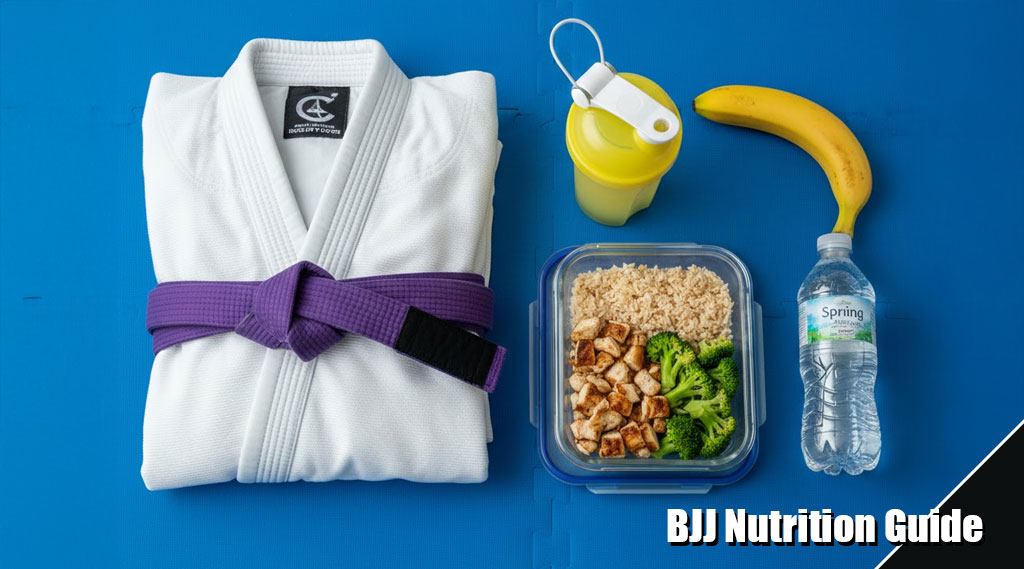
“Fuel Your Rolling”: What to Eat Before Training for Energy and After for Recovery?
Introduction: You Didn’t Lose to the Opponent; You Lost to Your Stomach
Have you ever been there? Two minutes into a high-intensity sparring round, and you suddenly feel drained, dizzy, or worse—nauseous, with a desperate urge to sprint to the bathroom. You were sure you were fit, so what went wrong?
In the world of Brazilian Jiu-Jitsu, sometimes your worst enemy isn’t the person across from you; it is your own blood sugar and stomach contents. This Martial Art (Wikipedia) involves heavy abdominal pressure (like the dreaded Knee-on-Belly) and constant inversion. Eating the wrong thing at the wrong time can turn a superhero into a sick patient instantly.
Today, we dive into “Fuel Your Rolling,” a guide distilled from the real-world experience of athletes and coaches at BJJ Bangkok under the Marcelo Silva Martial Arts standard. Learn how to have the fuel to roll hard and the nutrients to wake up recovered.
Photo: Richard Presley
Pre-Rolling – Fueling Without the "Bloat"
The Golden Rule of Timing
The #1 mistake new students make is eating a full dinner at 6:00 PM for a 7:00 PM class. BJJ and digestion are not friends.
The 2-3 Hour Rule: Eat your main meal (Rice, Meat, Veggies) at least 2 to 3 hours before class. This allows your Human Digestive System (Wikipedia) to move food out of the stomach.
The 30-60 Minute Rule: If you are starving right before class, stick to small “Quick Carbs” only.
Carb Strategy
Main Meal (3 hrs pre): Focus on Complex Carbs (Brown rice, Sweet potato, Oats). These provide Glycogen (Wikipedia) for sustained energy throughout the session.
Snack (30 mins pre): Focus on Simple Carbs (Banana, Fruit, or an Energy Gel) for immediate blood sugar access.
What NOT to Eat: High-fat/fried foods (digest too slowly), spicy foods (acid reflux risk), and gassy veggies like broccoli or beans.
During Training – Is Water Enough in the Tropics?
The BJJ Bangkok Heat Factor
Training in Bangkok’s humidity means you sweat 2–3 times more than in cooler climates. Drinking plain water might actually dilute your system if you aren’t replacing what you lose.
The Marcelo Silva Martial Art Hydration Formula:
Sip, Don’t Chug: Chugging water leads to a “sloshing” stomach during rolls.
Electrolytes are Mandatory: If you are a heavy sweater, add Electrolyte (Wikipedia) powder (Sodium, Potassium, Magnesium) to your bottle. This prevents the dreaded mid-roll cramps.
Post-Rolling – Eat to Repair, Not Just to "Fill Up"
The Anabolic Window
Your muscles are like a dry sponge after 90 minutes of Jiu-Jitsu. Eating within 30–60 minutes after training ensures your body moves from a state of breakdown to a state of repair.
Protein + Carbs = The Recovery Duo
Protein: Repairs torn muscle fibers. Aim for 20–30g of high-quality protein (Whey, Chicken, or Fish).
Carbohydrates: Refills your depleted glycogen stores so you aren’t a zombie at work the next day.
Anti-Inflammatory Boosters: To reduce Delayed Onset Muscle Soreness (DOMS), incorporate Omega-3s (Fish oil), Magnesium, and the local Thai favorite: Turmeric, which is a powerful natural anti-inflammatory.
A match between Brazilian Jiu-Jitsu blackbelts Gabriel Vella and Romulo Barral at the 2009 World Jiu-Jitsu Championships (attempting a triangle choke).
Are Supplements Necessary?
At BJJ Bangkok, we believe real food is the foundation, but these three supplements are scientifically backed for grapplers:
Creatine Monohydrate: Boosts explosive power for takedowns and bridging.
Whey Protein: The most convenient way to hit your recovery window after a late-night class.
Caffeine: Excellent for focus, but use with caution if you train in the evening to avoid Insomnia (Wikipedia).
Conclusion: Nutrition is "Invisible Jiu-Jitsu"
Training doesn’t end when you step off the mats. What you put in your body determines how fast you learn and how long you last. By following the “Fuel Your Rolling” principles, you will find your “gas tank” growing larger every week.
At BJJ Bangkok, under the Marcelo Silva Martial Arts philosophy, we care about the whole athlete. Start treating your body like a high-performance machine today.
“Eat like a black belt, train like a beast.”
FAQ: BJJ Nutrition
Q: What should I eat before an early morning class? A: Keep it very light. A banana or a piece of toast with honey 30 minutes before is ideal. If you prefer “fasted training,” ensure you stay hydrated.
Q: How do I stop getting cramps? A: Cramps are usually a sign of dehydration or a lack of Magnesium/Potassium. Drink electrolytes during class and consider a Magnesium supplement before bed.
Q: Why can’t I sleep after a late BJJ session? A: Your Adrenaline (Wikipedia) and Cortisol levels are spiked. A cool shower, Magnesium Bisglycinate, and avoiding screens after training can help your nervous system settle down.
Q: Does BJJ Bangkok provide personalized diet plans? A: Our coaches at Marcelo Silva Martial Arts offer general nutritional guidance as part of our holistic approach to martial arts excellence.
Don't Just Watch—Participate!
2026 is your year to shine. Pick a date, clear your schedule, and let’s get to work. We look forward to seeing you represent our community on the podium!
 ไทย
ไทย  English